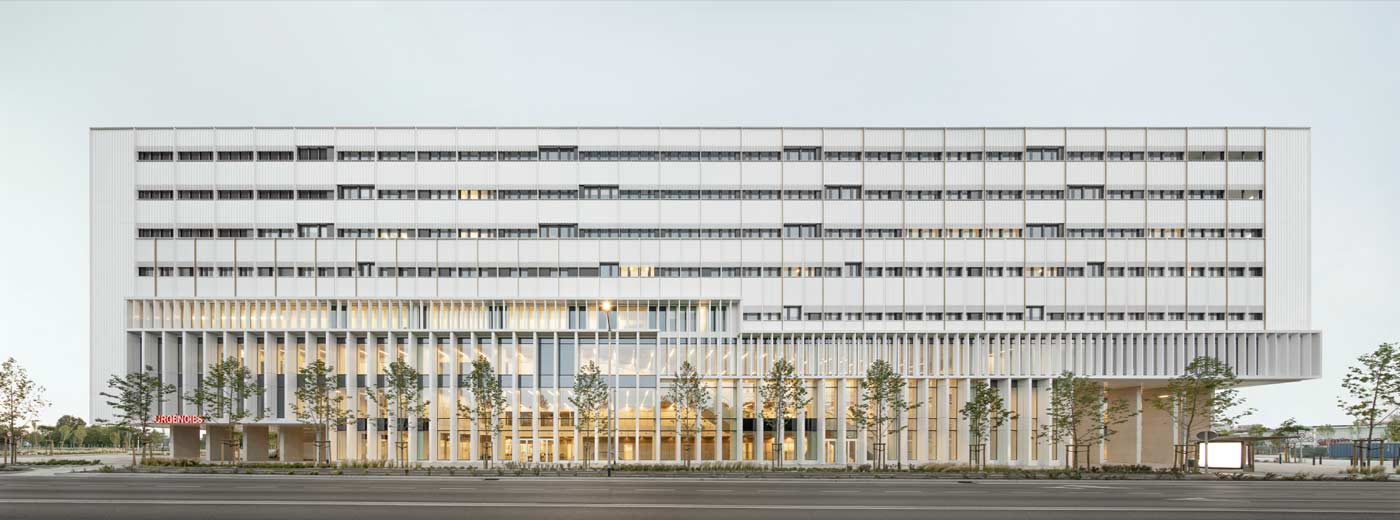
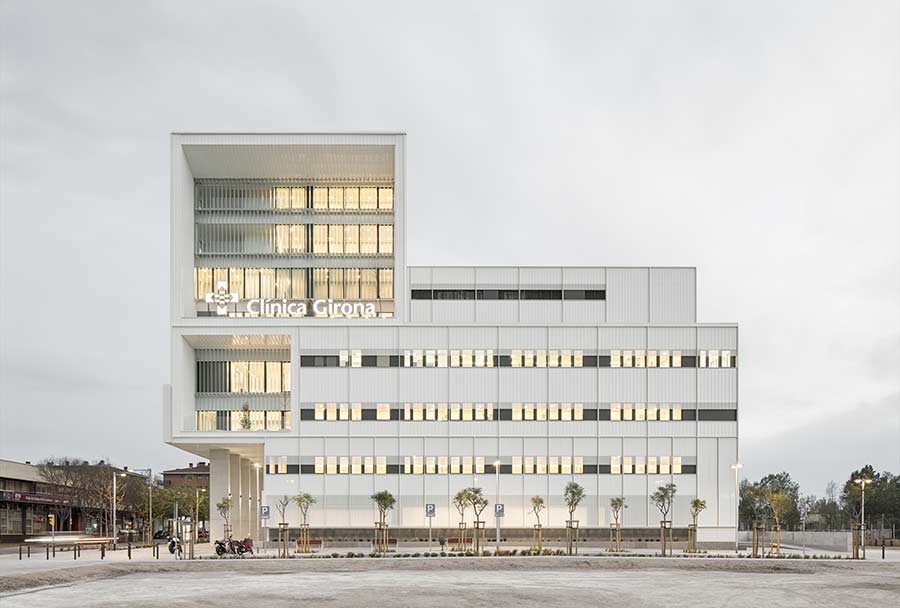
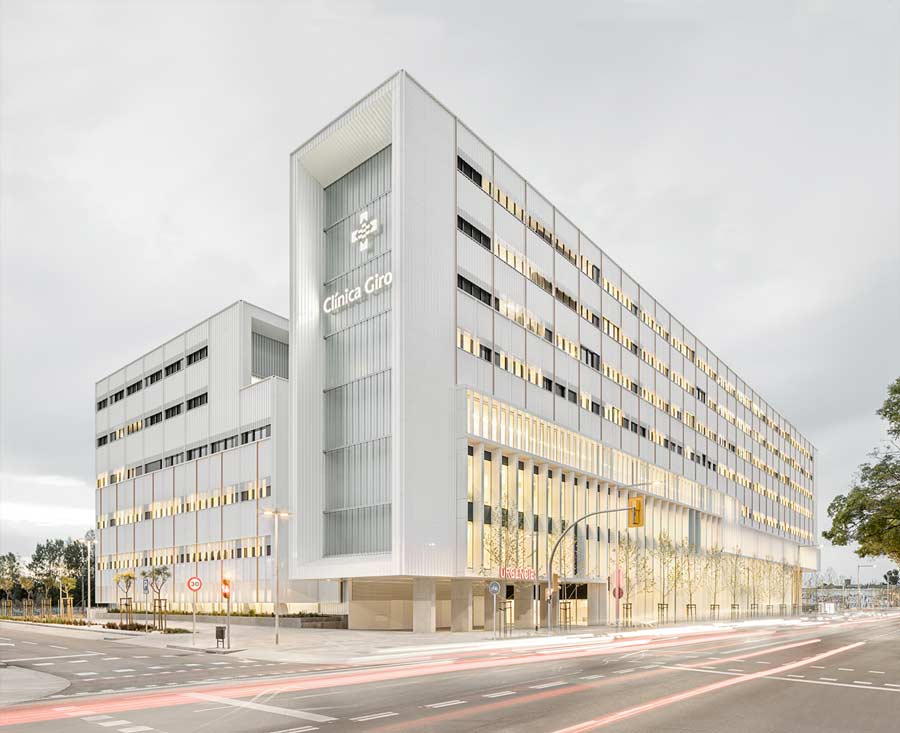
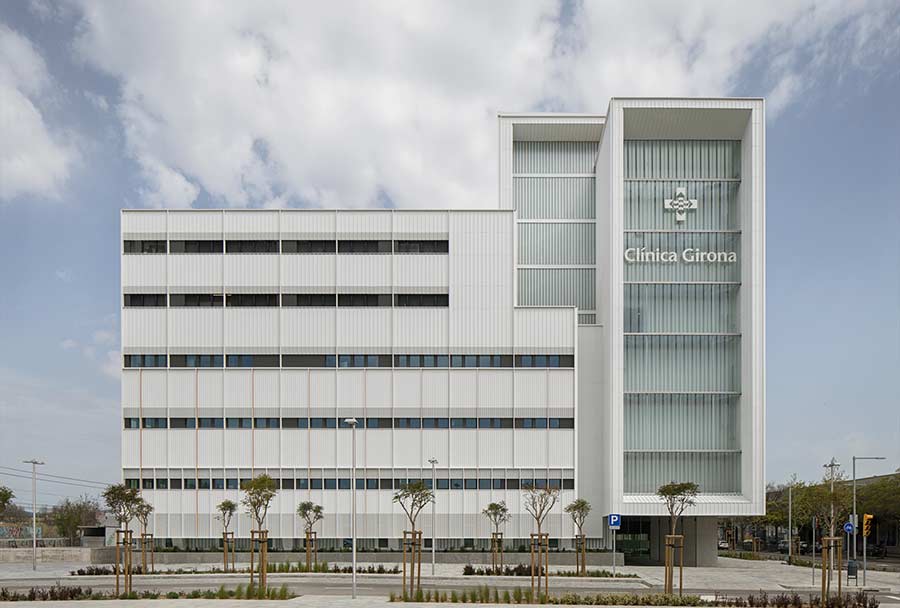
The new clinic, located at Carrer Barcelona 206 since April 2022, triples the space of the old building on Carrer Joan Maragall, a premises with 88 years of uninterrupted healthcare activity. Now, with the new premises, Clínica Girona is expanding from an area of approximately 13,000 m² to 41,000 m².

It expanded all services that existed up to that point, becoming a reference clinic in Catalonia, being the most modern hospital centre to incorporate total accessibility, which allows all people to be treated on equal terms, from their arrival at the centre, during their stay and on their departure, regardless of their motor or sensory capabilities.

The new Clinic has 120 inpatient beds, eight high-definition smart operating theatres, three delivery rooms and three endoscopy rooms, eight intensive care unit (ICU) bays and ten emergency bays, a day hospital area, an oncology area and a pain medicine area, with 20 individual bays, an outpatient minor surgery room and also more haemodialysis rooms. All this is supported by permanent diagnostic imaging, clinical analysis and pathological anatomy services. The new Clinic also has 180 parking spaces in the basement.

The construction work, which lasted three and a half years, was carried out by a temporary joint venture led by Construccions Rubau, along with Alfred, from an architectural project by PMMT Architects, specialists in hospitals. The direction of the execution of the work and the quality and health and safety control was carried out by the technical architecture company AT2.

Hundreds of workers from various specialised companies have worked to build a modern, innovative, and functional hospital, serving an efficient, healthy, accessible, and sustainable clinic, committed to people's health. An innovatively healthy building to house the medicine of the future.

Innovative in the design of versatile spaces and aseptic, health-generating materials. Efficient in patient and staff mobility and healthy, with natural light and interior courtyards to improve comfort. Universally accessible: anyone will be able to access anywhere without barriers. And sustainable because it has been designed to guarantee energy and economic savings.

News from the new Girona Clinic:

The new Girona Clinic is equipped with the latest medical advances and incorporates state-of-the-art technology, with smart operating theatres, more emergency and ICU beds, and more efficient and comfortable rooms. Outpatient clinics are being expanded and cardiology and day hospital services are being enhanced, as is all diagnostic imaging. In this area, the Magnetic Resonance Service stands out, the only service of its kind in Catalonia and Spain that concentrates three pieces of equipment (one of them 3 tesla, claustrophobia-friendly, and another vertical MRI) in the same department, allowing for the three types of resonance that patients can currently have: low, medium, or high intensity.

The new building is laid out and our levels: three basements, the ground floor, and seven floorson two levels: 7 storeys on the Barcelona street side and 5 storeys on the train track side). 

The Plant – 3 and it's all public parking and there's also a public parking area to the -2, and the Warehouse and Archive are also located. 

On floor -1 There is the Nephrology and Dialysis Service, the Nuclear Medicine Service (with PET-CT), and the Hospital Pharmacy Service.

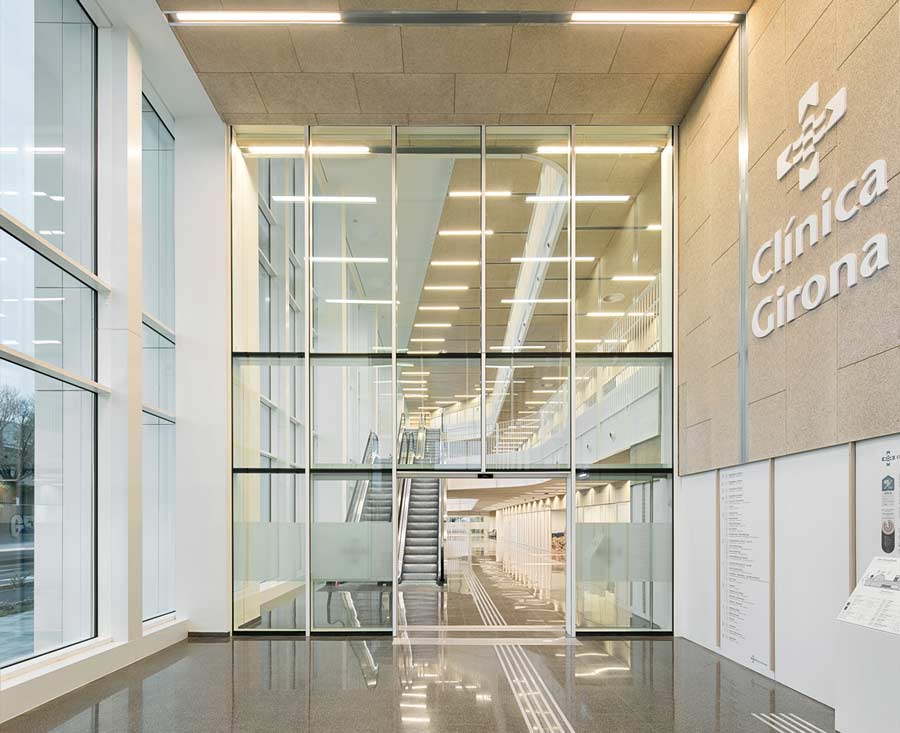
On the ground floor The Emergency Department and the Diagnostic Imaging Department are located here. This, in addition to the Reception, the Cafeteria, and the Admissions offices.

Climbing up first floor, there are two outpatient blocks, the Physiotherapy and Rehabilitation Service, and the Laboratory.

To the first floor Two more blocks of Outpatient Consultations, the Pathological Anatomy service, the Ophthalmology Institute, and the Assisted Reproduction Unit have been located.

At the third Pis There is the Surgical Block (8 central operating theatres and 16 recovery beds). There is also the Digestive Endoscopy area, three delivery rooms, a minor surgery operating theatre, and the Day Hospital, to enhance major day surgery and interventions that do not require an overnight stay. Additionally, angiology and cardiac surgery will be boosted on this floor.

The fourth floor It has an ICU, a conventional Hospitalisation area, as well as the Management and Administration services and the IT service. On the fifth floor, there are two Hospitalisation units, Maternity and Paediatrics. The sixth and seventh floors are for Hospitalisation. This last floor is prepared for isolation, and was redesigned following the covid-19 pandemic, as were other spaces and cubicles which are also prepared for future pandemics.


All floors are connected by 9 lifts (4 public and 5 service), three atriums, which provide light to the interior rooms of the building, and by escalators that interconnect floor -1, the ground floor, and floors 1 and 2, which are the outpatient areas, where public access is located.

The entire structure of Clínica Girona is supported on 600 spring boxes, installed on pillars. The springs separate the structure of the upper floors of the building from the basement levels. In this way, the Clinic is isolated from the vibrations produced by passing trains. This technology guarantees acoustic comfort and protects the highly sensitive medical equipment.

Regarding internal circulation, a distinction has been made: public circulation (of outpatients, visitors, family members and companions) and technical circulation (Clinic staff and materials), which are physically separated in two. Public circulation is located close to and parallel to Barcelona Street, and technical circulation is placed parallel to the railway line. The more public part intends to have a visual relationship with the life of Barcelona Street, creating a large boulevard for people's circulation, both inside and outside.

Image gallery